
Want to solve a similar problem?
Book a strategy call if you want to talk through the bottleneck, the right first move, and whether this kind of approach fits your business.

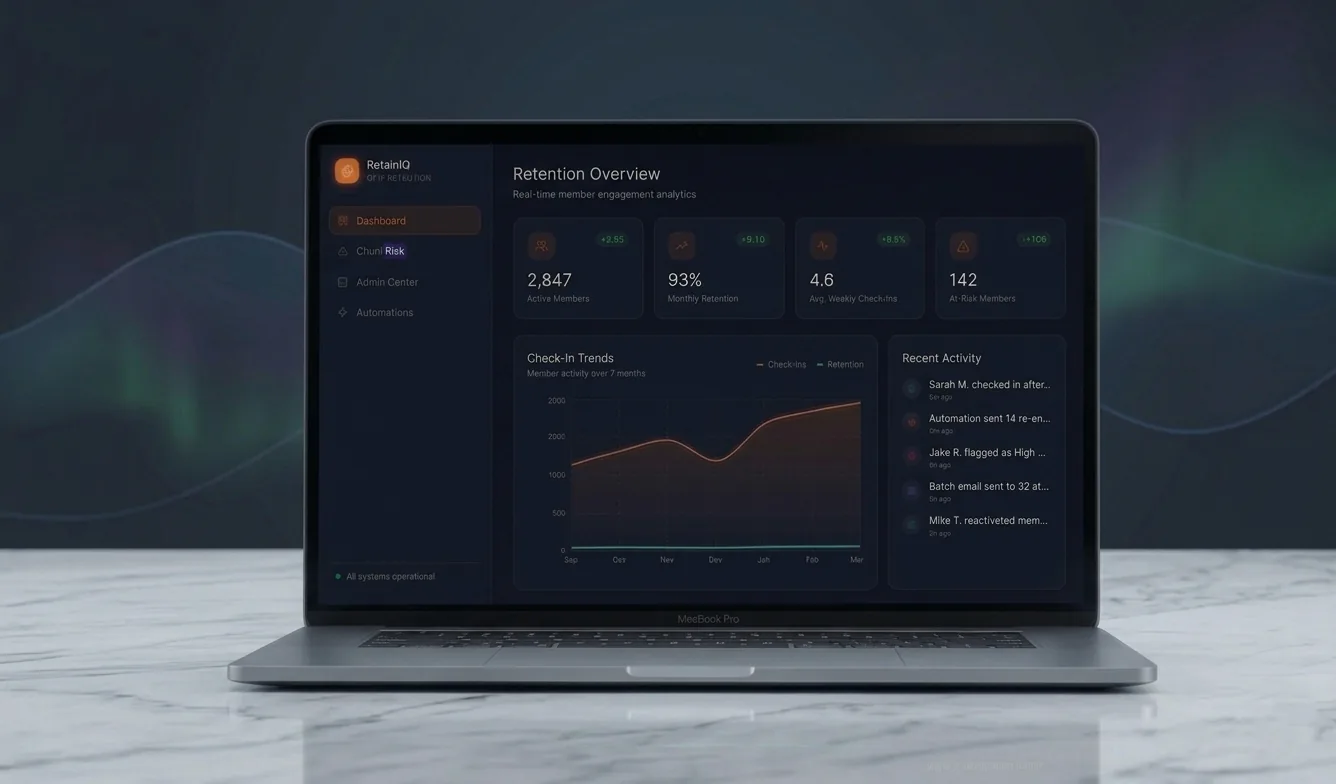
A gym was losing members to dropout without clear visibility into why it was happening or when members were at risk. There was no systematic retention touchpoint, and by the time a cancellation arrived the decision was already made. We built a messaging and feedback automation that handled member check-ins, re-engagement nudges, and structured feedback collection at the point of dropout, surfacing patterns the business could actually act on.
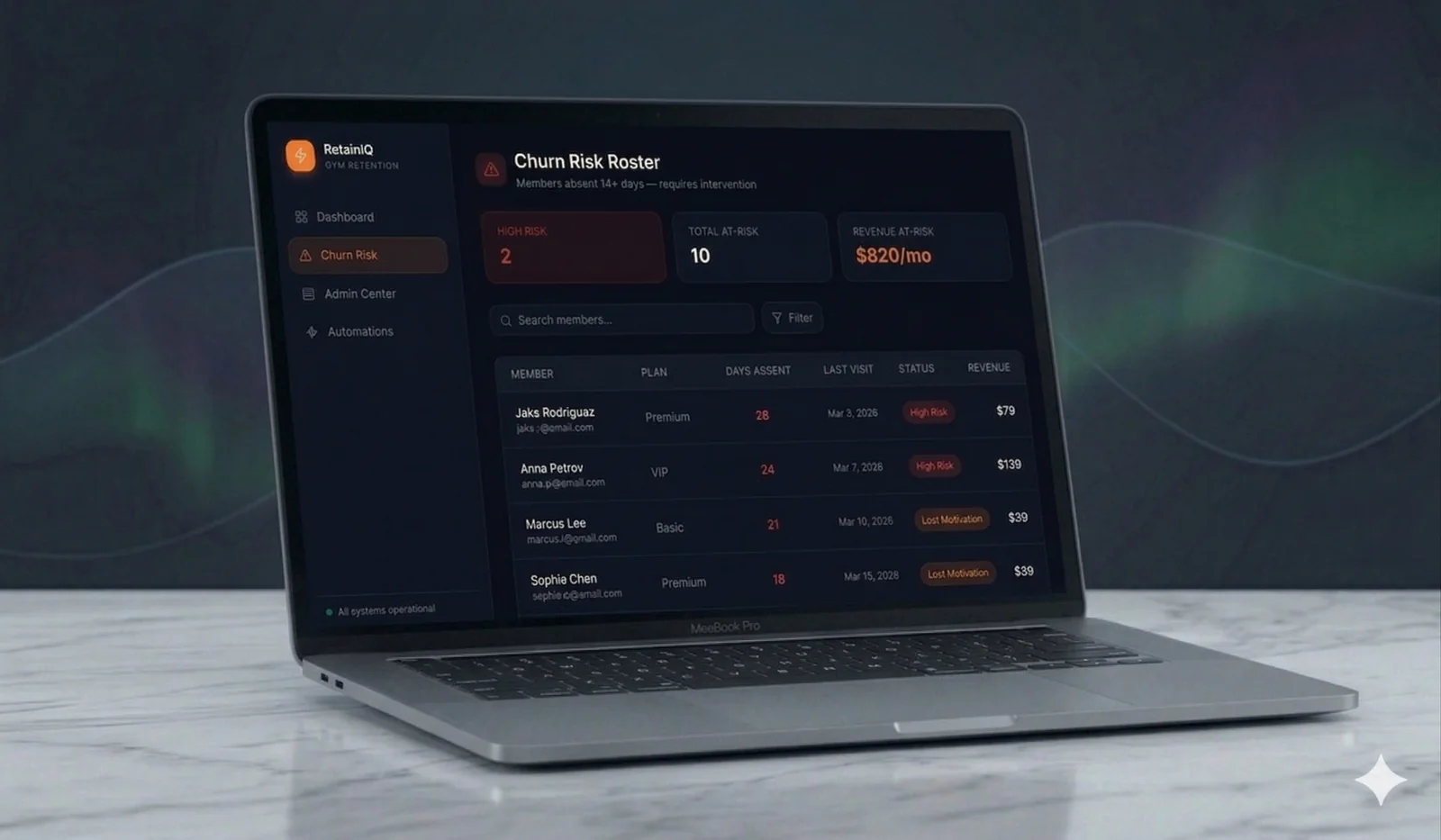
Members were becoming less active, then cancelling, with no early-warning system and no structured intervention between the first drop in engagement and the cancellation request. The business had no consistent view of whether members were happy, at risk, or already checked out.
Retention messaging had to feel supportive rather than pushy (heavy-handed outreach would have made disengaged members cancel faster). Feedback collection needed to be simple enough that members already considering leaving would actually respond.
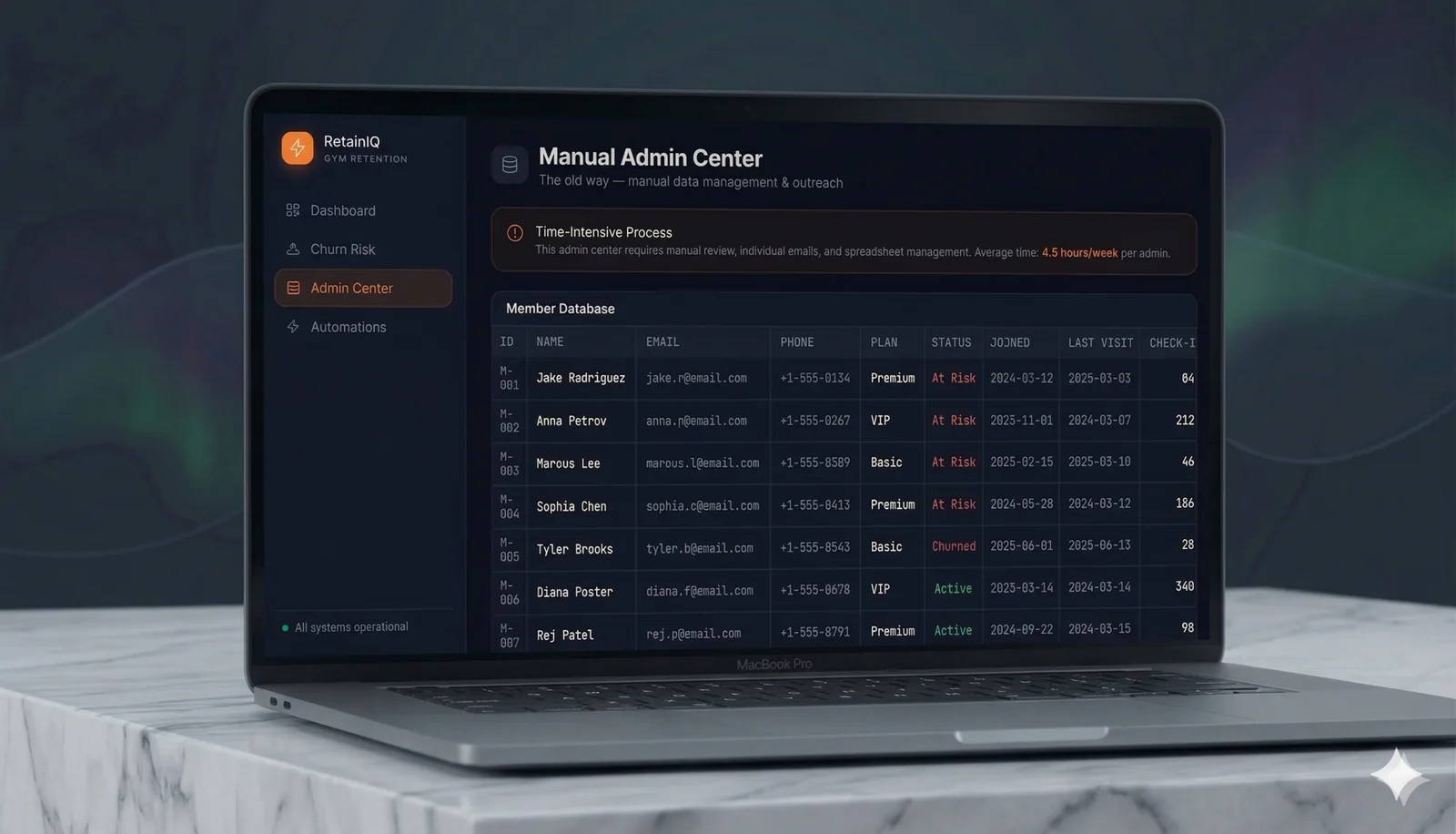
Built a retention automation flow with attendance-aware check-in messaging, re-engagement prompts triggered by inactivity patterns, and a structured feedback sequence for members showing churn signals. Cancellation feedback was captured through a low-friction flow designed to surface root causes rather than just record a decision.
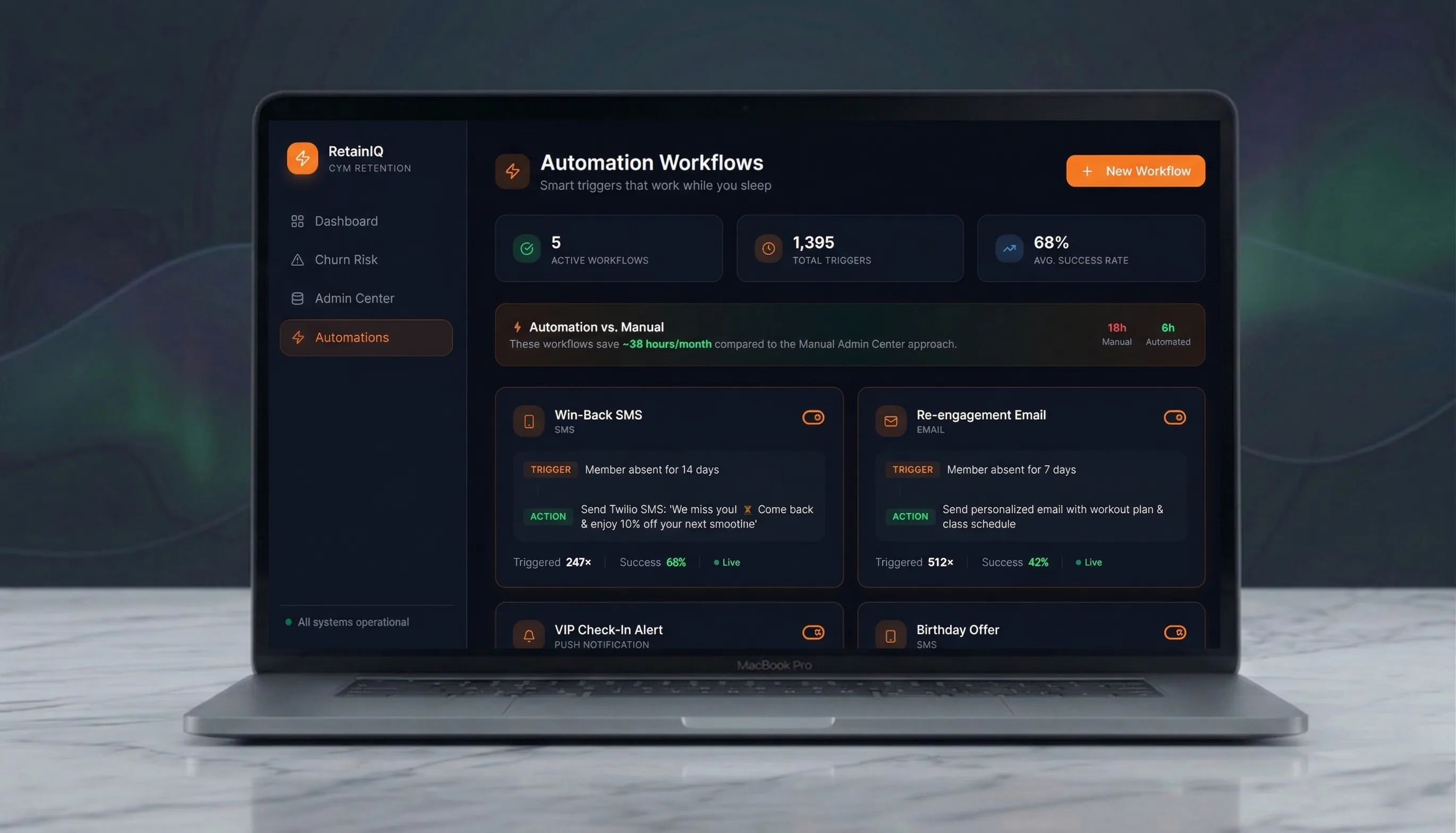
The business gained clearer visibility into when and why members were dropping off, and a structured process to intervene before churn became irreversible. Retention messaging became consistent and systematic, replacing ad hoc follow-up with a flow that ran without daily manual input.
Retention messaging was systematised around real engagement signals rather than generic scheduled messages, making outreach feel relevant instead of automated.
Cancellation feedback capture gave the business structured data on dropout patterns it could act on, replacing the gap between cancellation and any real understanding of why.
Re-engagement sequences triggered by inactivity patterns gave the team a consistent, hands-off way to reconnect with members before their decision to leave became final.
Book a strategy call if you want to talk through the bottleneck, the right first move, and whether this kind of approach fits your business.