
Want to solve a similar problem?
Book a strategy call if you want to talk through the bottleneck, the right first move, and whether this kind of approach fits your business.

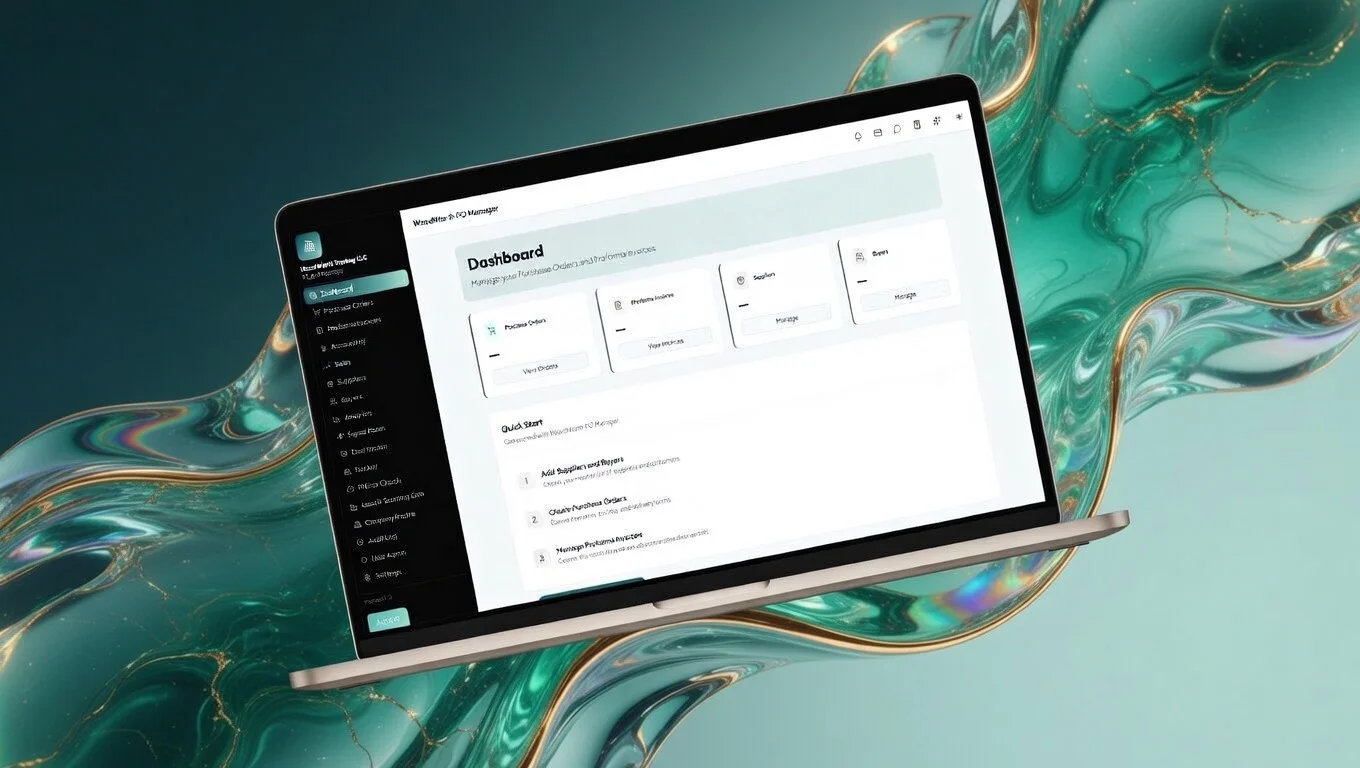
Woodworth International was operating with key commercial workflows (accounting support, purchase orders, proforma invoices, shipment tracking, CRM management, compliance handling, and sales analytics) spread across disconnected processes. Coordinating between them required constant manual effort, created reconciliation delays, and made it hard to get a clear picture of the business at any given point. We designed and built a multi-module internal platform that connected these workflows under one role-aware system.
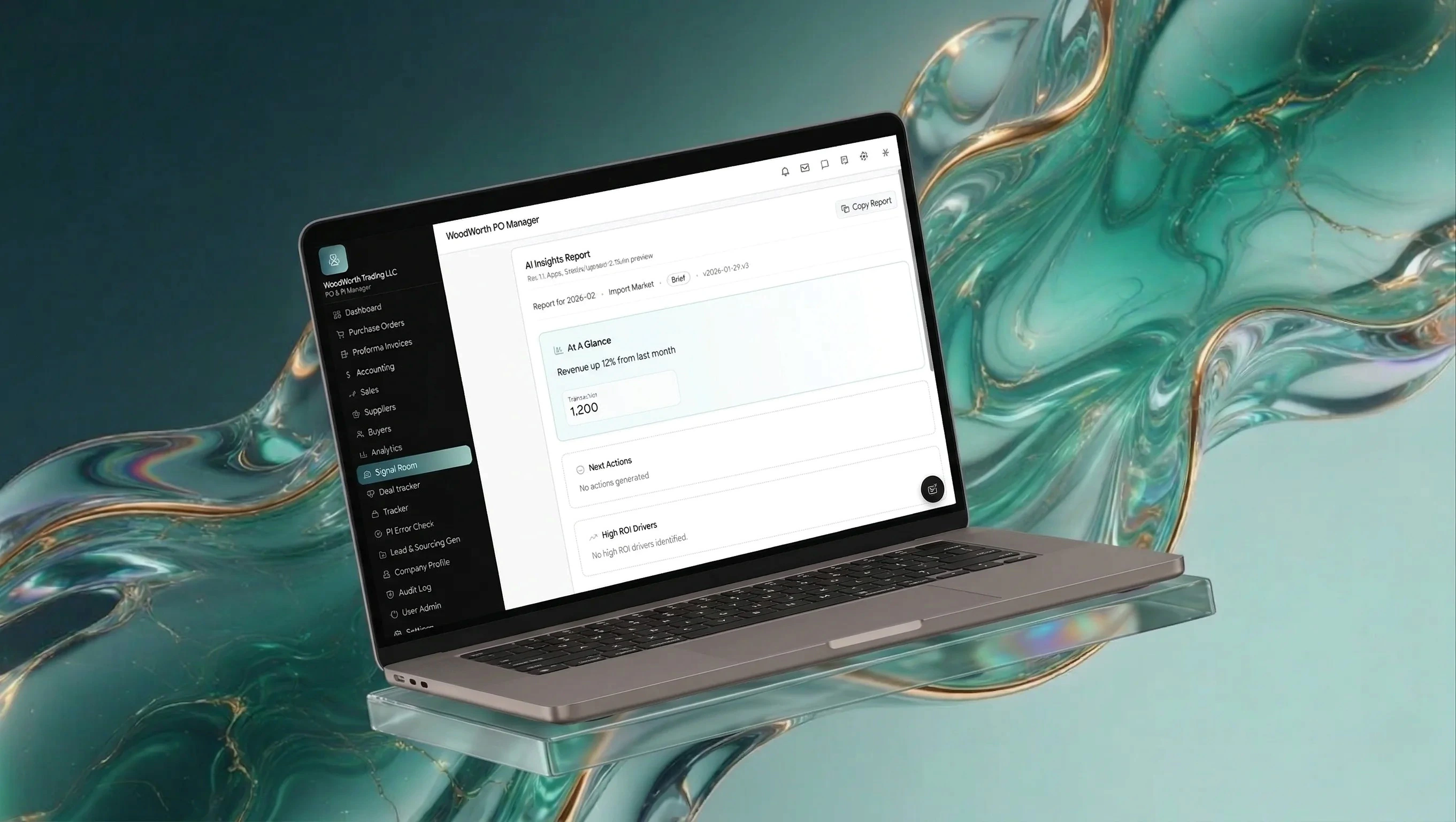
Every major workflow in the business operated in isolation. Purchase orders, proforma invoices, sales orders, supplier invoicing, shipment tracking, CRM records, and analytics each lived in separate places. Coordinating between them required manual work, and supplier invoice discrepancies against purchase orders were often caught late because there was no connected view across the commercial picture.
The system had to handle multiple distinct business functions accurately under one platform without becoming unmanageable. Role-based permissions were required across every module. The platform needed to be precise enough for financial documents (purchase orders, proformas, and invoices) while staying usable for operational and CRM workflows.
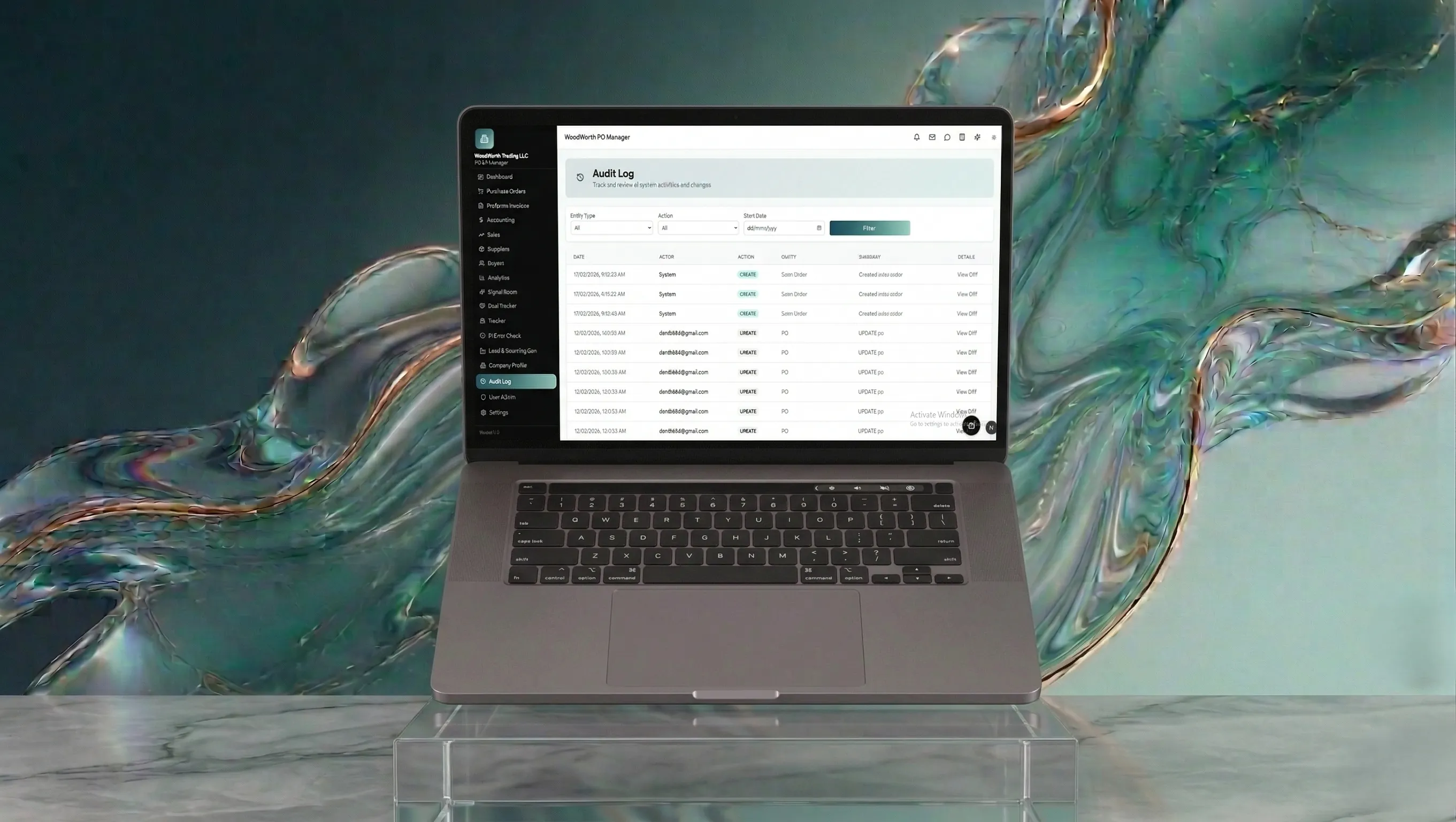
Designed and built a connected internal platform with dedicated modules for accounting workflows, purchase order management, proforma invoice generation, sales order tracking, analytics across the full commercial picture, market insight tools, CRM management, shipment visibility, compliance support, and role-based administration. Modules were connected so data flowed across the business view rather than requiring manual reconciliation between isolated systems.
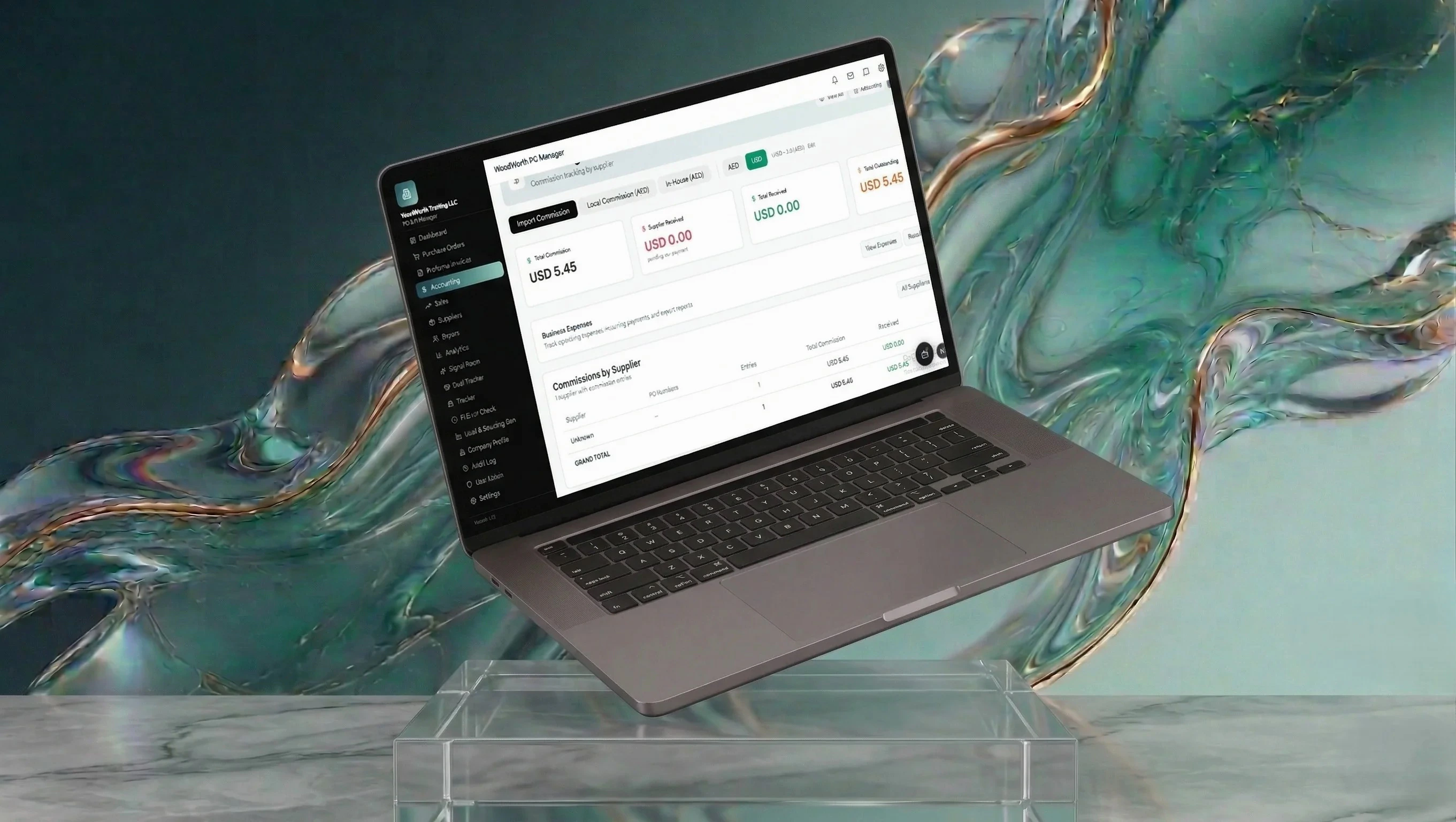
Commercial operations became more organised across every major workflow. Supplier invoice discrepancies against purchase orders were surfaced earlier before they created downstream issues. Reporting across purchasing, sales, and operational performance became accessible without manual preparation.
Purchase orders, proforma invoices, sales orders, and supplier invoicing were unified into one connected workflow, reducing the manual coordination previously required across disconnected processes.
Analytics improved visibility across purchasing activity, sales performance, open opportunities, and operational gaps in a single connected view.
Supplier invoice discrepancies were flagged automatically against purchase-order expectations, allowing the team to catch and resolve them earlier in the workflow.
Book a strategy call if you want to talk through the bottleneck, the right first move, and whether this kind of approach fits your business.